
Terence Tao · 2026-09-08 · notable
Terence Tao — good open math problems are a resource AI is mining out
Terence Tao argues that good open mathematical problems are scarce and slow to replace, and that pointing AI at them indiscriminately solves today's questions while draining the supply that guides the next wave of research.
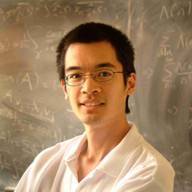
Tao compares good open problems to drinking water: you can run dry next to an ocean.
What is it?
Terence Tao posted a thread on Mathstodon arguing that the supply of genuinely valuable open mathematical problems is far smaller than it looks. Anyone can generate endless questions, he writes, but almost all of them are insignificant — either too trivial or hopelessly far beyond current technique. He compares the situation to a region that suffers a critical drinking-water shortage while sitting beside a massive ocean.
How does it work?
The argument turns on what Tao calls the difficulty landscape. Deciding whether a question is worth highlighting is, in his words, a lengthy, deliberate and subjective process that depends on where a problem sits relative to known techniques and on what else it connects to. He says the current AI era has flattened that landscape and removed the boundaries mathematicians relied on to locate promising problems.
Why does it matter?
The cost Tao names is to the ecosystem rather than to any single proof. Indiscriminate use of powerful solution-extraction tools, he writes, can meet the short-term goal of solving the problems at hand while failing to sustain the conditions for the next wave of progress. As a partial answer he suggests designating classes of problems that should be reserved for careful analysis rather than opened to bulk automated attack.
Who is it for?
mathematicians and AI-for-science researchers