
Intel · 2026-10-12 · notable
Intel GPU D270 — an inference card with up to 480 GB of LPDDR5X
Intel GPU D270 is the new name for the Crescent Island data-center GPU: a 350 W air-cooled PCIe card for AI inference, with 160 GB of LPDDR5X on Intel's card and up to 480 GB on partner boards. Customer sampling has started.
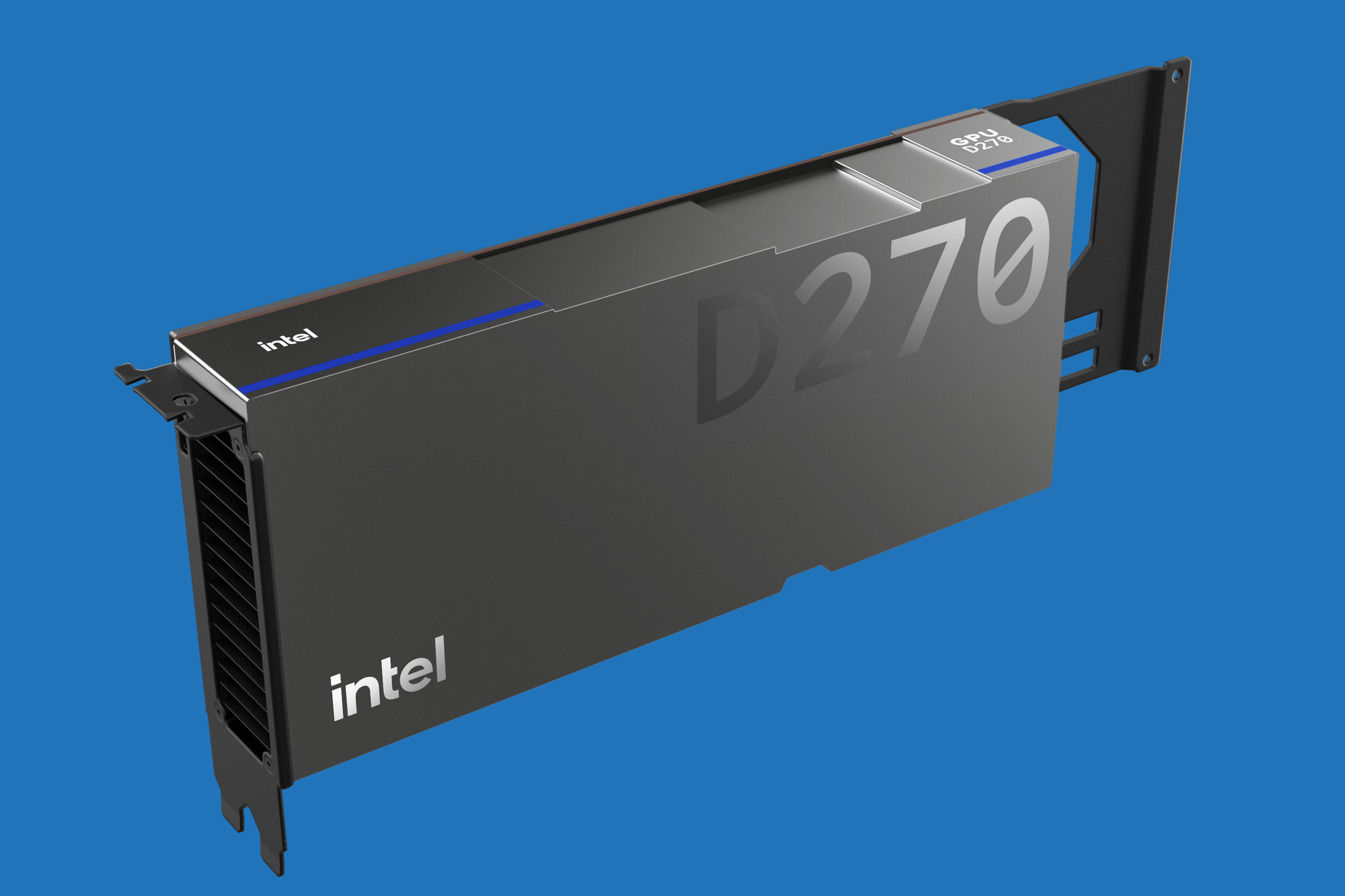
Intel's first D-Series GPU trades fast HBM for a lot of cheaper memory, aimed at serving big models.
What is it?
Intel GPU D270 is the first and so far only card in Intel's new GPU D-Series, announced at the Open Compute Project Global Summit. It is the product name for Crescent Island, the inference chip Intel first outlined earlier in 2026.
How does it work?
The card uses the Xe3P architecture with 32 Xe cores and 256 XMX matrix engines, and ServeTheHome lists 1.3 PFLOPS of dense FP8 and 1.5 TB/s of memory bandwidth. Instead of high-bandwidth memory (HBM), it uses LPDDR5X: 160 GB on Intel's own card and up to 480 GB on partner designs, in a standard PCIe 5.0, 350 W, air-cooled card.
Why does it matter?
Large memory per card is what decides how big a model you can serve on one GPU, and LPDDR5X is cheaper than HBM, at the cost of lower bandwidth. Intel promises day-zero support for leading open models through vLLM and PyTorch, but it has not announced a launch date or a price yet.
Who is it for?
teams running LLM inference on their own servers